Daily Challenge
Preview the practice available today for this language pair. Try the examples below, then explore more in Lingobi.
Lesson
Word Match
Sentence Builder
French for English speakers
Begin with a conversation you can imagine having: asking for a recommendation, introducing a friend, or arranging a time to meet. Learn the opening and a possible reply together. French becomes easier to follow when written words have a familiar spoken shape, so combine reading with listening when audio is available and say useful expressions aloud.
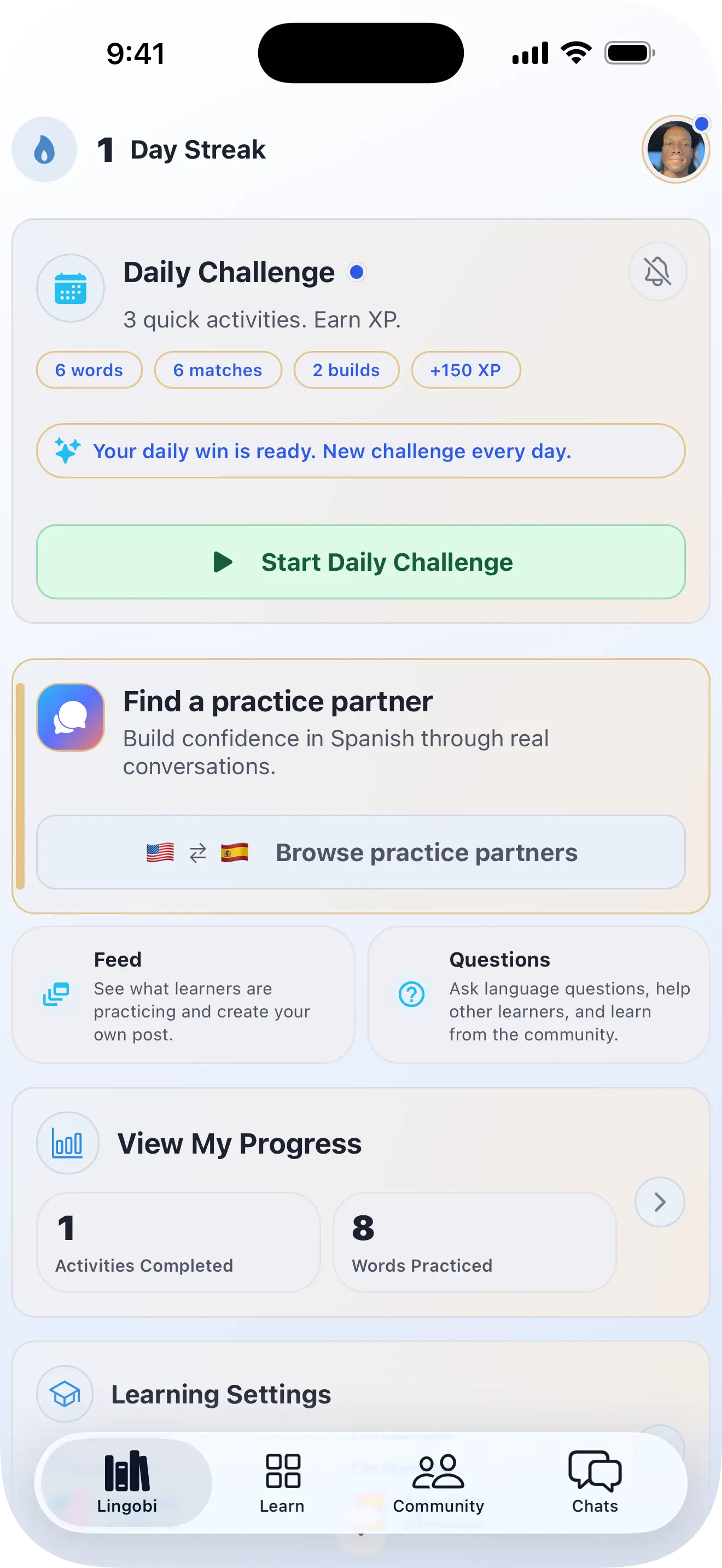
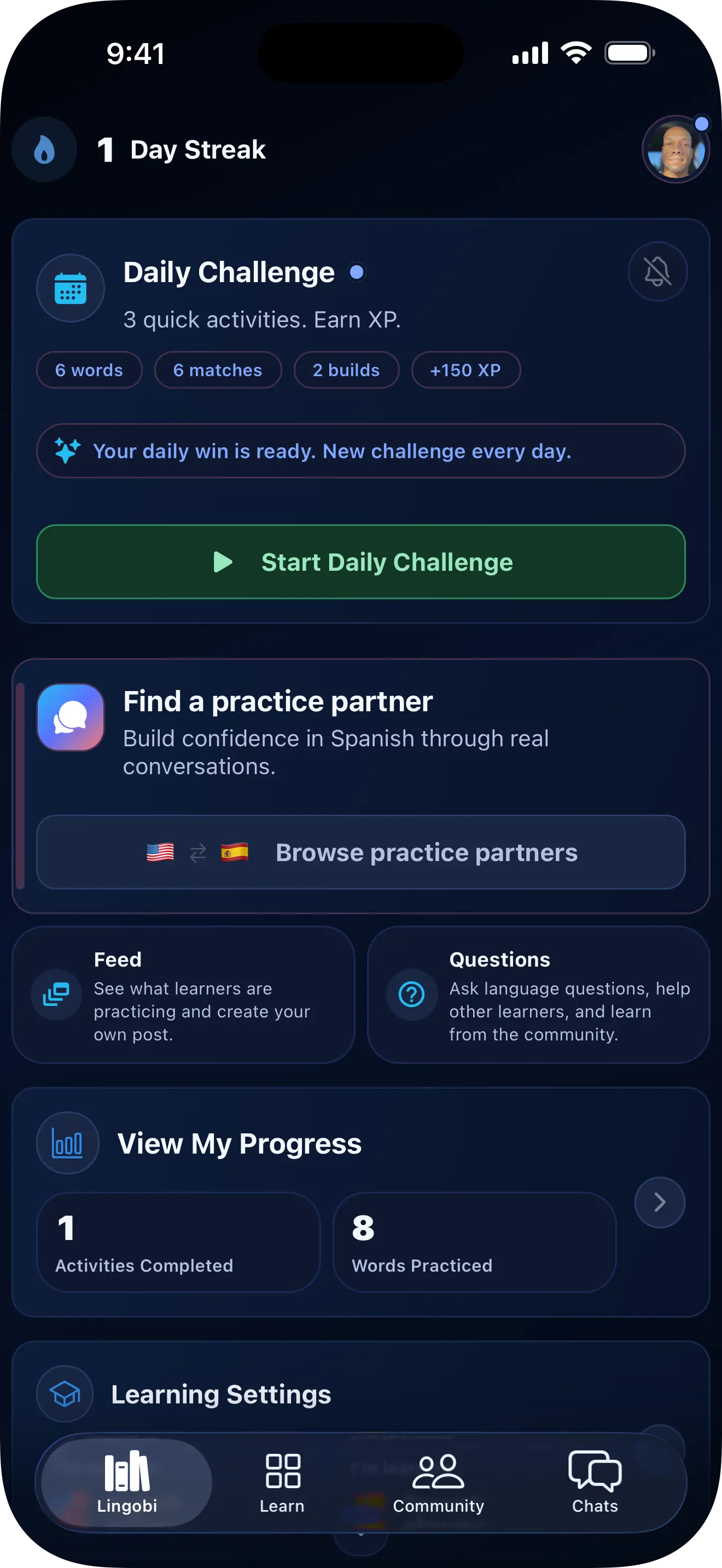
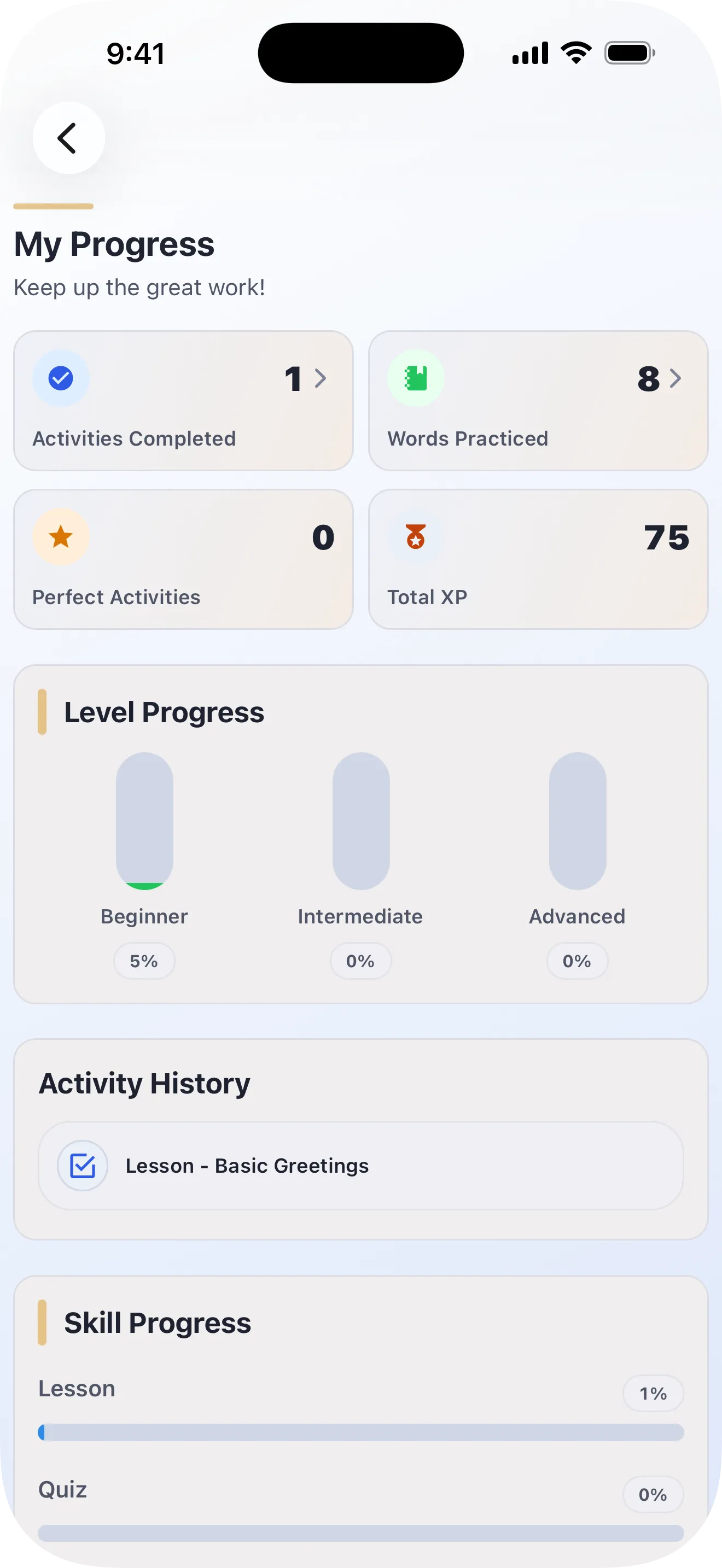
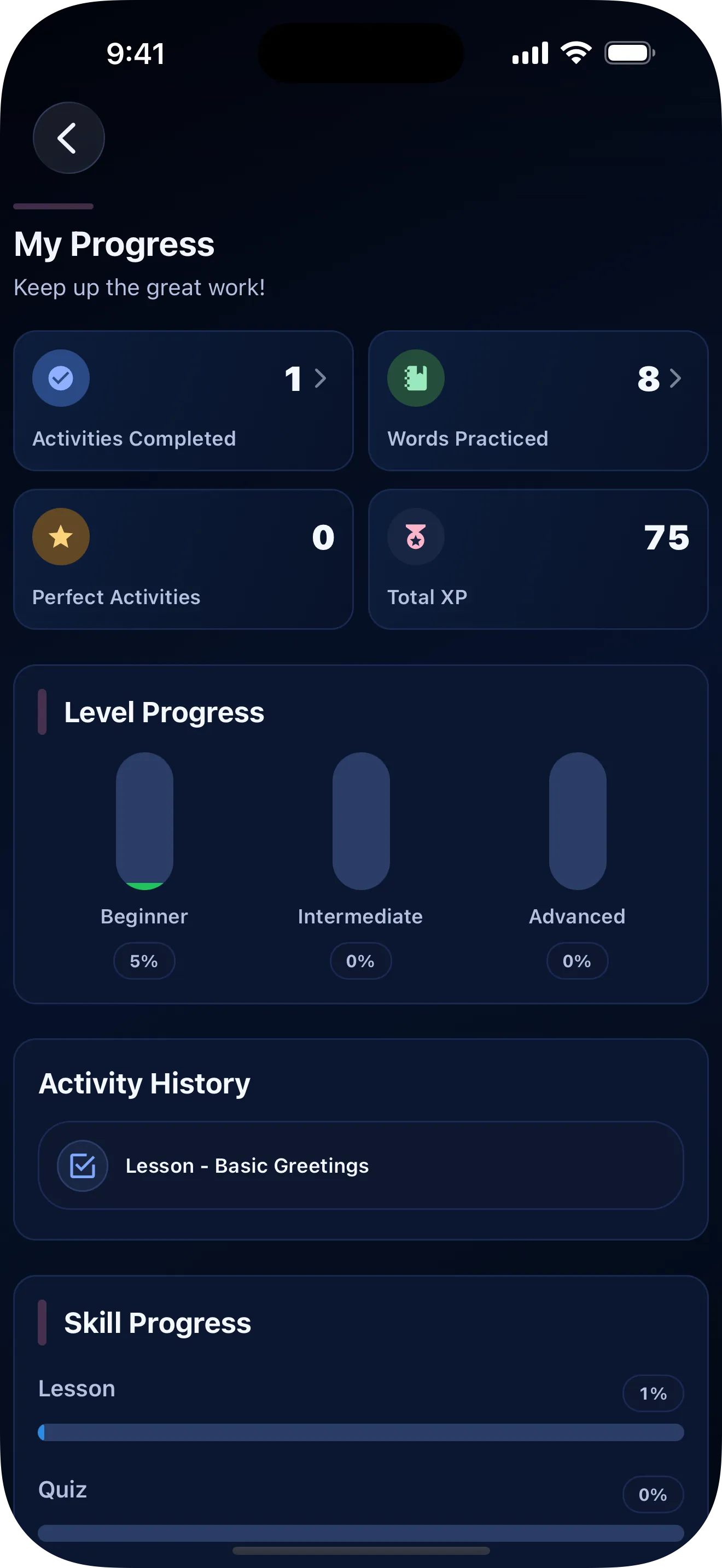
Illustrative app screens. Content varies with your learning language.
Listen for word connections and vowel sounds in expressions you understand.
Keep gender and number inside a small combination you can reuse.
Practice je, tu, and vous in complete examples rather than an isolated word list.
Prepare a possible reply and a clarification phrase alongside your question.
French and English share familiar-looking vocabulary, but spelling does not tell you to use the English sound or meaning. Some final letters are silent, and words can connect through enchaînement or liaison in particular contexts. Listen to a short phrase as a whole before picking out its words. Notice nasal vowels and the difference between u and ou; repeat a suitable example slowly enough to hear what changes.
Give a new noun its article from the beginning, such as un livre or une question. English the does not show the grammatical gender you need for French agreement. Keep a subject and verb together in useful frames like je voudrais or vous avez, then replace the object. Practice a polite question with a short answer, and learn a request to repeat so you have a next step when the reply is unfamiliar.
Illustrative app screens. Content varies with your learning language.
Preview the practice available today for this language pair. Try the examples below, then explore more in Lingobi.
Lesson
Word Match
Sentence Builder
Explore the activities available for your language pair in the app and return for fresh daily practice.
Get the AppChoose a goal for the week and keep the practice small enough to revisit. Recognizing a phrase on the page, understanding it when spoken, and recalling it in a reply are different tasks. Give each a turn using the same useful expressions.
Read a brief question and check its meaning. Listen when a suitable recording is available, then repeat the whole phrase. Notice connected words and vowel sounds without trying to pronounce every written letter separately.
Learn a noun with its article and a useful verb with its subject. Replace one detail, such as an item or a person, and check the agreement. Keep both examples so the change has a meaning you can remember.
Prepare one likely answer to your question and a way to ask for clarification. Say both turns aloud. Try the exchange with a different time or object before making the conversation longer.
After practice, pick a sound, word, or response that stopped you. Return to a short example and use it again another day. Expand your goal when the familiar exchange becomes easier to follow and answer.
A small conversation has a beginning, a response, and a way to continue. Practice all three before adding more vocabulary.
Prepare a polite question about a meal, place, or activity. Learn how to accept a suggestion and ask one simple follow-up question.
Say a name and one detail about a friend or family member. Change the person in your example and check the pronoun and verb together.
Suggest a day and a time, then practice accepting or changing the plan. Listen for the information you need rather than trying to understand every word.
Ask for repetition, slower speech, or an explanation. Use one of these phrases when you lose the thread, then check the part you did understand.
Choose one everyday situation and a few useful expressions. Learn their meaning and spoken form together, then practice an answer as well as an opening question. Add more language when you can recall the shorter exchange without always looking at the translation.
Written letters do not all correspond to separate sounds, and neighboring words can connect in speech. Compare a short written example with audio when available. Learn the whole expression first, then notice which letters and word boundaries you hear.
Begin with grammar that helps your current phrase: an article with a noun, a subject with a verb, and a simple question. Change one part of the example and check the result. Return to a rule when it explains a difference you actually need.
Choose English as your native language and French as your learning language. Explore the practice available for that pair, review familiar expressions, and use them in a short reply or conversation. Return to the sounds or words that were difficult to recognize.