German for English speakers

Learn German through useful phrases and short everyday exchanges

Start with a task you can imagine completing: asking for a coffee, introducing yourself, or agreeing on a meeting time. Learn an opening phrase with a likely answer, then change one detail. Familiar-looking German words can give you a starting point, while practice with sounds, articles, and whole sentences helps turn recognition into a usable response.

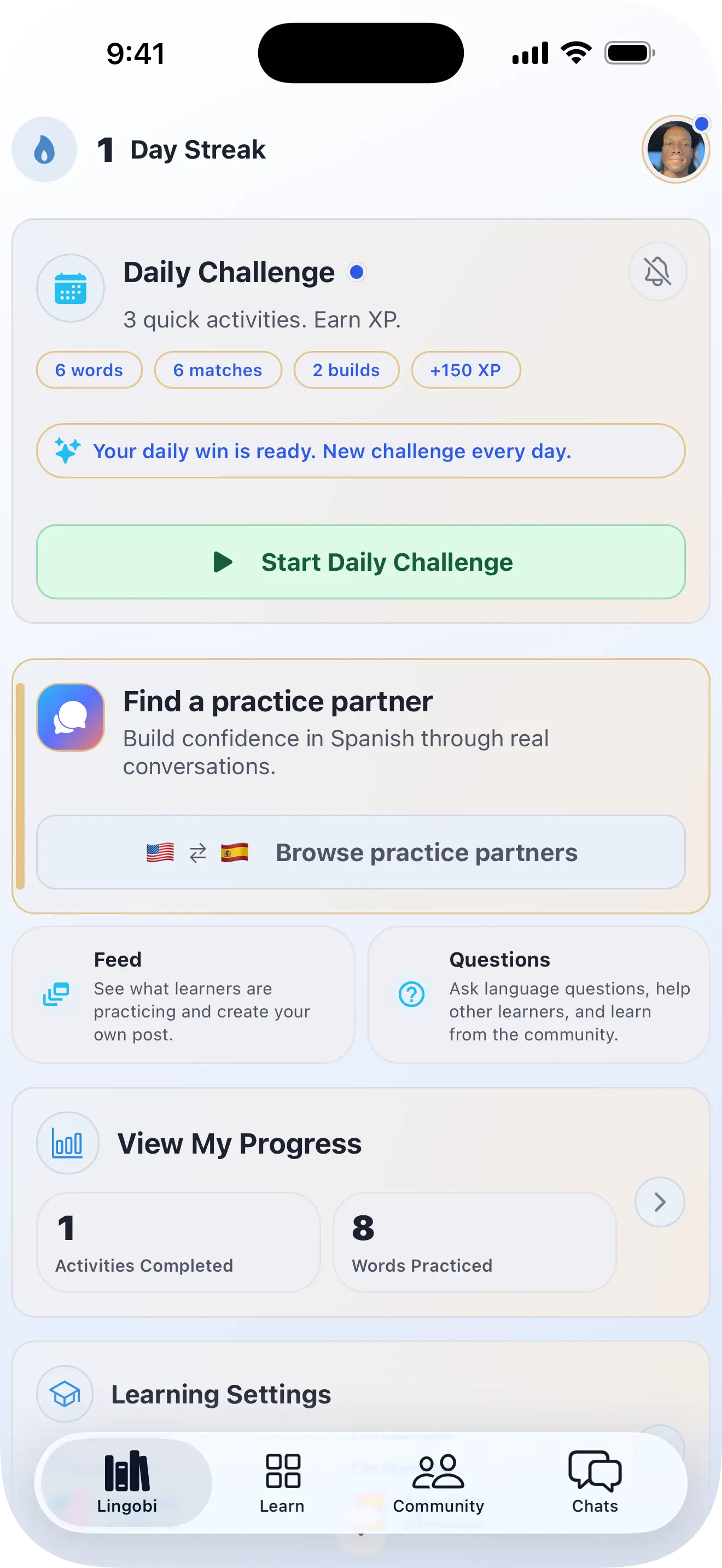
Lingobi app welcome screen

Illustrative app screens. Content varies with your learning language.

Keep an article with the noun

Learn gender and a useful plural form as part of vocabulary you can use.

Hear the phrase before reading it again

Notice vowel length, umlauts, and consonant sounds in a meaningful expression.

Give the verb its place

Compare complete sentences when you change the person or opening information.

Prepare a reply as well as a question

Practice accepting, confirming, and asking for help in the same exchange.

Learn the noun and the sentence around it

English and German share vocabulary roots, but a familiar spelling does not guarantee the same sound or meaning. Notice ä, ö, ü, vowel length, and the different sounds that ch can have in words. German nouns are capitalized; learning that spelling habit can help you find them in a sentence. When suitable audio is available, listen to a short expression and repeat the whole phrase before focusing on the sound that was difficult.

Keep a noun with its article, such as der Tisch, die Tür, or das Haus. Add a useful plural, for example die Tische. English the does not show the gender or case information German articles carry. Compare der Tisch with Ich sehe den Tisch to see an article change in context. In an ordinary main-clause statement, the conjugated verb usually takes the second sentence position, which does not mean the second written word. Heute lerne ich Deutsch shows how a time expression can come first. Keep a question and reply together, then check the verb and article when you change the example.

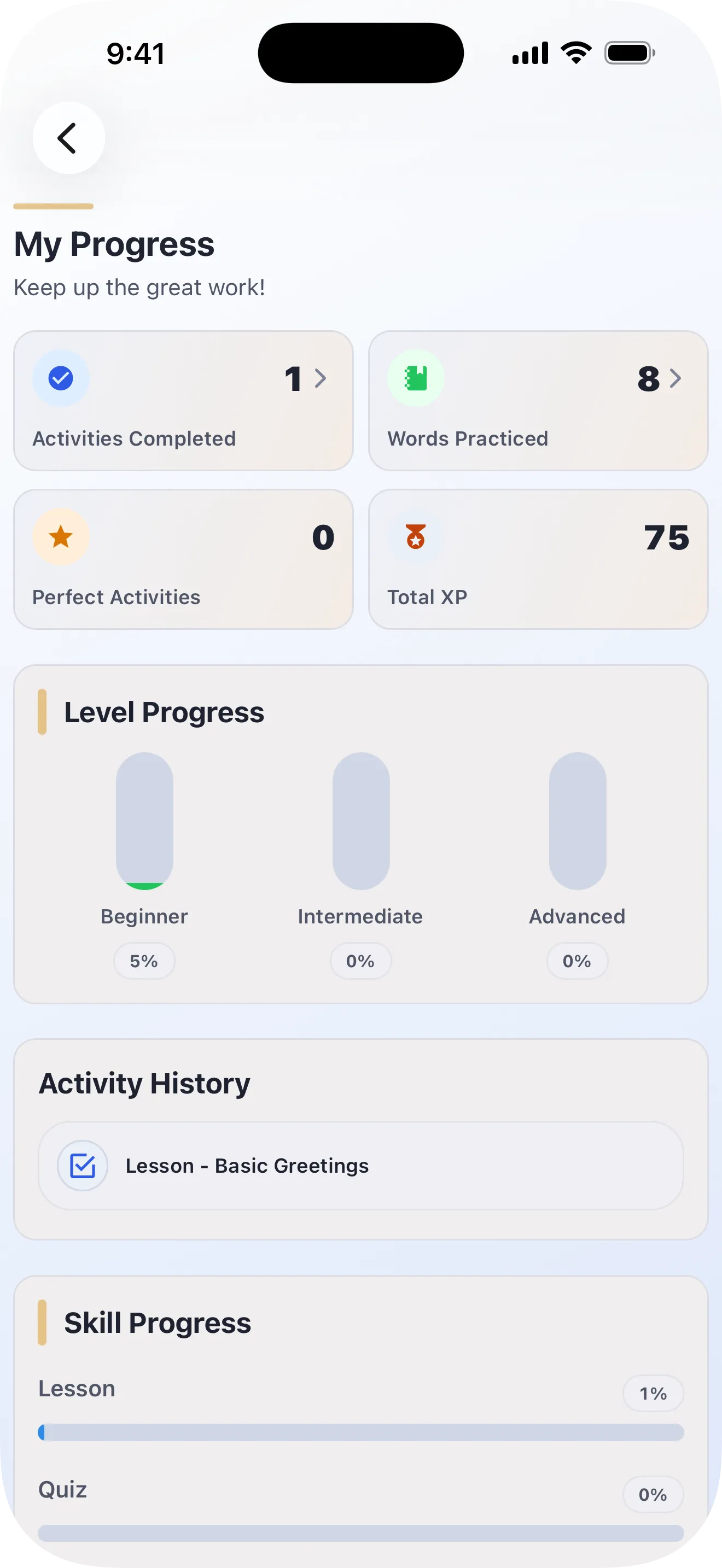
Lingobi progress screen

Illustrative app screens. Content varies with your learning language.

Daily Challenge Food & Drink Today's preview

Daily Challenge

Preview the practice available today for this language pair. Try the examples below, then explore more in Lingobi.

Lesson

Bedien dich Reich mir das Salz

Word Match

Help yourself → Bedien dich
Pass the salt → Reich mir das Salz

Sentence Builder

bitte. dich Bedien

Make every day a practice day.

Explore the activities available for your language pair in the app and return for fresh daily practice.

Get the App

A routine for vocabulary, sentence order, and replies

Choose one situation and a handful of expressions for the week. Read them, listen when suitable audio is available, and recall a reply without always checking the translation. Reuse the same vocabulary so a new ending or word order has a clear purpose.

  1. 1. Learn one complete request or question

    Check its meaning, spelling, and sound. Keep the whole expression while you notice an umlaut or vowel length. Practice a suitable spoken example when one is available.

  2. 2. Save the noun with its article

    Learn a noun and article together, then compare a sentence using that noun. Add a plural form when your situation needs it. Notice case changes in the example instead of treating each article as an unrelated word.

  3. 3. Change one detail and check the verb

    Swap an item, a person, or a meeting time. Check the article, verb form, and position in the new sentence. Prepare a likely reply and a confirmation as well as the opening.

  4. 4. Review the point where you hesitated

    Choose one sound, article, or response you could not recall. Return to a brief example another day. Make the exchange longer when the familiar question and reply become easier to use.

Give your first German phrases an everyday purpose

A small exchange lets you reuse grammar with a meaning you already understand. Add a detail when the shorter version is familiar.

Ask for something politely

Use a complete request for a drink or item. Learn the article in that request, then practice confirming your choice.

Introduce yourself

Give your name and one detail about work or interests. Ask a related question and learn a brief response you can recognize.

Agree on a meeting time

Suggest a day and time, then accept or change one part of the plan. Check the verb position when you start with a time expression.

Clarify what you heard

Ask for repetition or an explanation. Confirm the part you understood before returning to an unfamiliar word or number.

Questions about learning German from English

Does knowing English help me start German?

Related vocabulary can help you recognize some words, but check their meaning and pronunciation in context. Learn nouns with articles rather than assuming English the will translate to one form. Use complete examples to notice where German word order differs.

How can I learn der, die, and das?

Keep the article with each new noun and learn a plural form you can use. Then see the noun in a sentence, where its article may change with case. Begin with a few meaningful examples instead of trying to guess gender from every English translation.

Is the German verb always the second word?

No. In a typical main-clause statement, the conjugated verb comes in the second sentence position, and a position can contain several words. Questions and subordinate clauses can use other patterns. Practice a short statement with its matching question before adding longer clauses.

How can I practice German in Lingobi?

Choose English as your native language and German as your learning language. Explore the activities available for that pair and reuse familiar expressions in a short reply or conversation. Review the sounds, articles, or verb forms that made you hesitate.

Return to one German exchange you want to use

Explore Lingobi for English and German. Use the practice available for your pair and build on a question, a response, and a detail you can change.