Learn Chinese · Explained in English
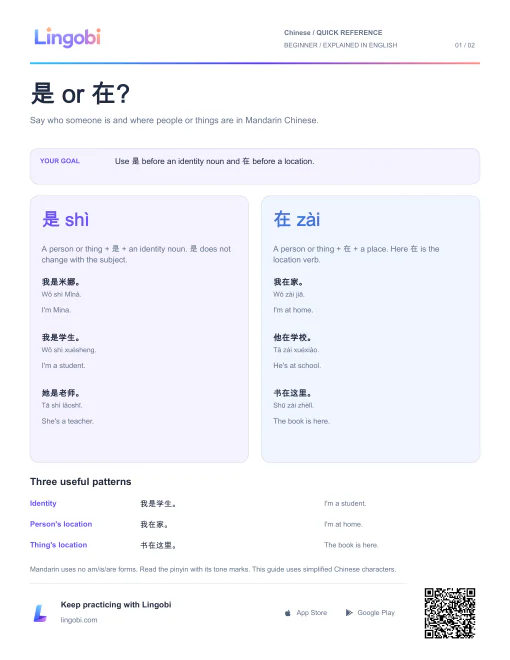
Practice guide是 or 在?
Use 是 before an identity noun and 在 before a location.
PDF · 2 pages · Beginner
Make one useful concept click. Choose a reference chart or a short practice guide with clear examples. Save it for later or print it to learn at your own pace.
All guides on this page are explained in English.
Learn Chinese · Explained in English
Practice guideUse 是 before an identity noun and 在 before a location.
PDF · 2 pages · Beginner
Learn Chinese · Explained in English
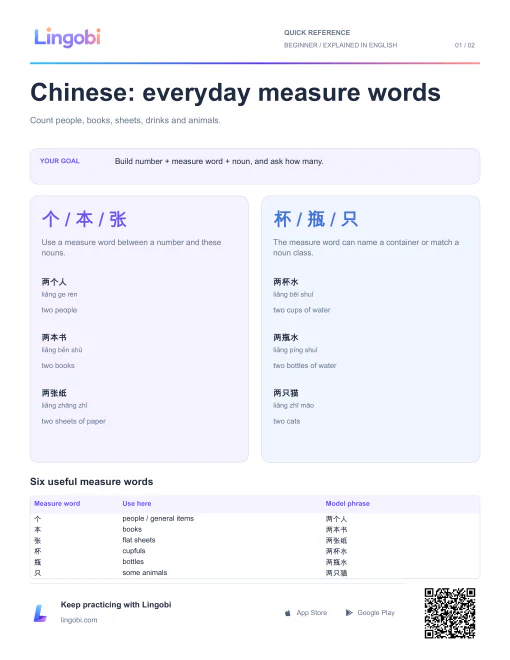
Practice guideCount people, books, sheets, drinks and animals.
PDF · 2 pages · Beginner
Learn French · Explained in English
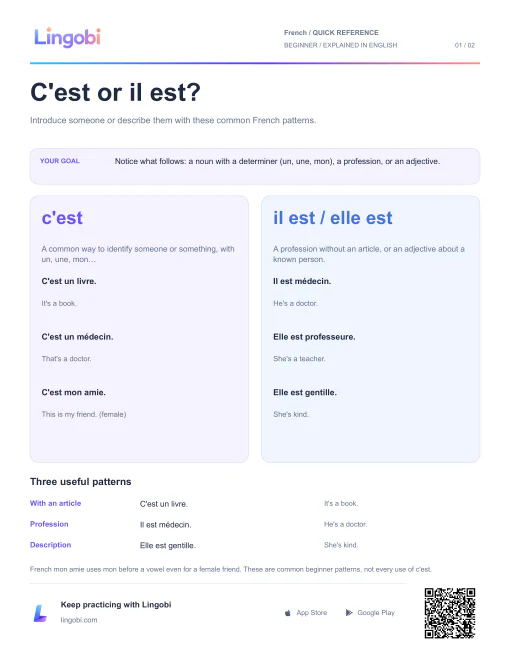
Practice guideNotice what follows: a noun with a determiner (un, une, mon), a profession, or an adjective.
PDF · 2 pages · Beginner
Learn French · Explained in English
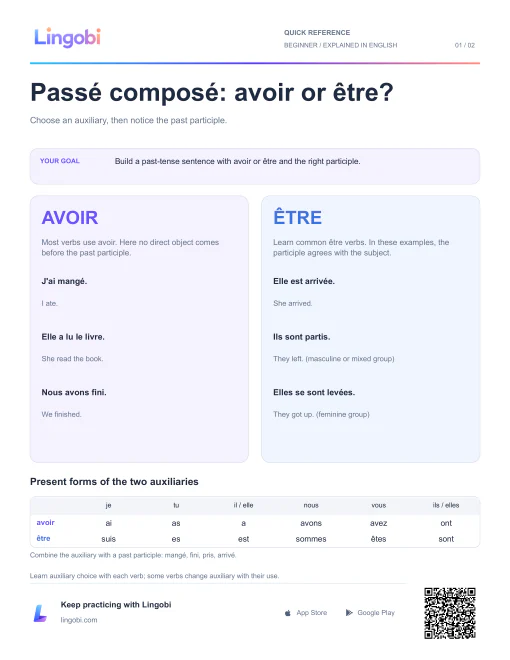
Practice guideChoose an auxiliary, then notice the past participle.
PDF · 2 pages · Beginner
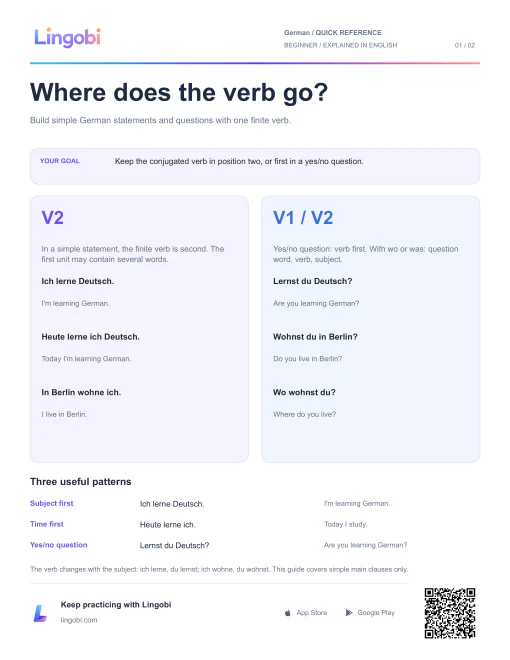
Learn German · Explained in English
Practice guideKeep the conjugated verb in position two, or first in a yes/no question.
PDF · 2 pages · Beginner
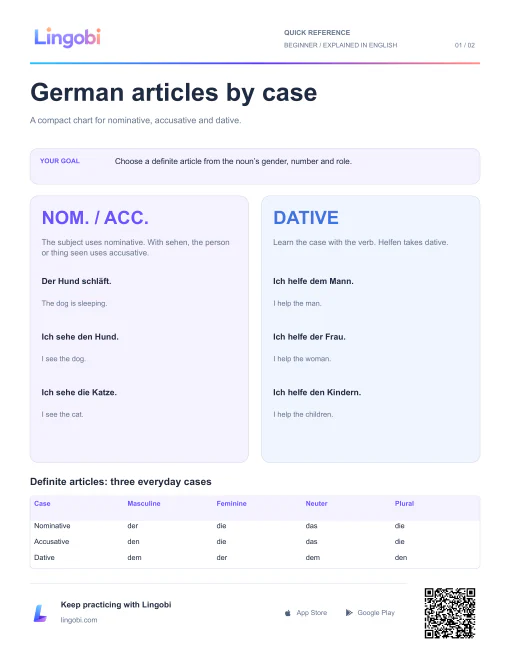
Learn German · Explained in English
Practice guideA compact chart for nominative, accusative and dative.
PDF · 2 pages · Beginner
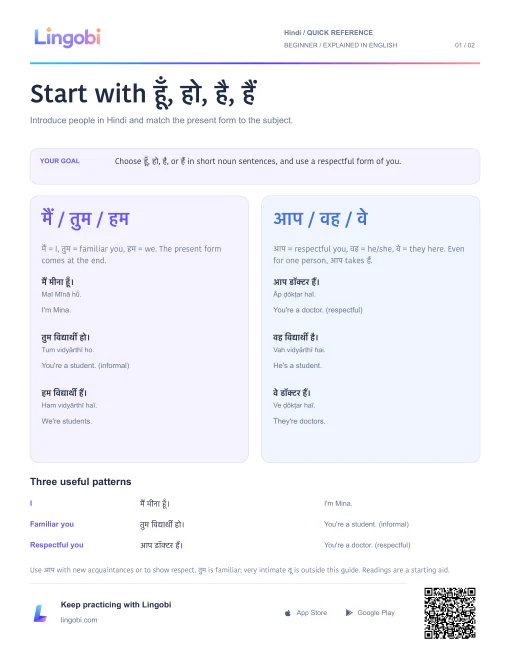
Learn Hindi · Explained in English
Practice guideChoose हूँ, हो, है, or हैं in short noun sentences, and use a respectful form of you.
PDF · 2 pages · Beginner
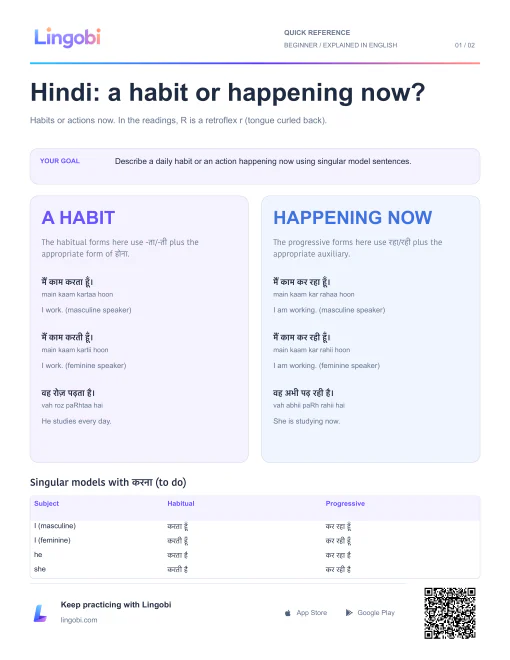
Learn Hindi · Explained in English
Practice guideHabits or actions now. In the readings, R is a retroflex r (tongue curled back).
PDF · 2 pages · Beginner
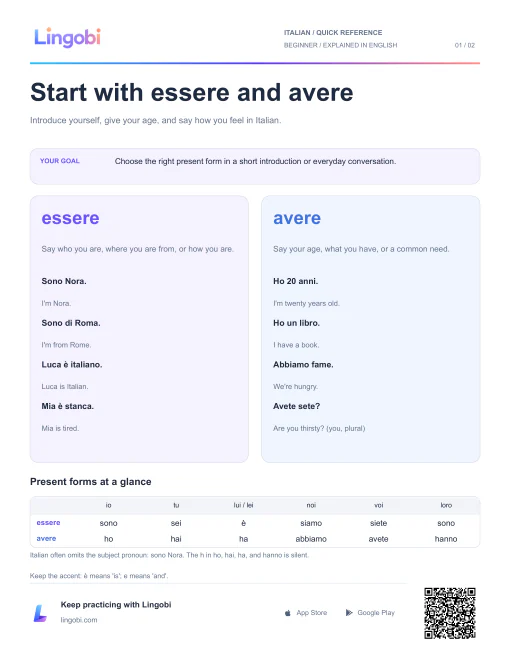
Learn Italian · Explained in English
Practice guideIntroduce yourself, give your age, and practice essere and avere with eight questions and explained answers.
PDF · 2 pages · Beginner
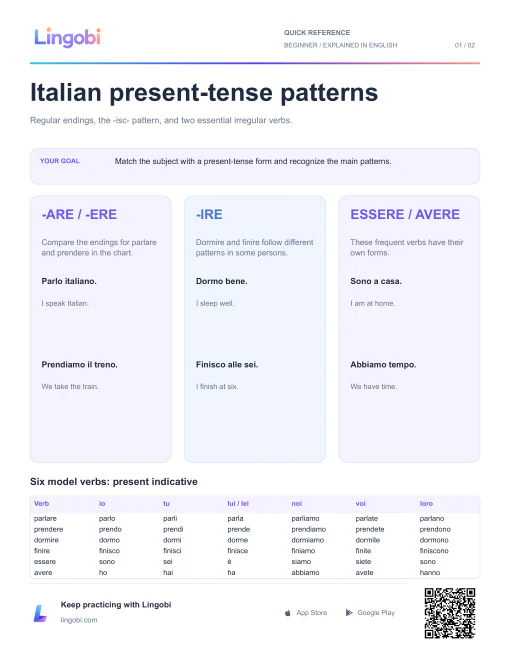
Learn Italian · Explained in English
Practice guideRegular endings, the -isc- pattern, and two essential irregular verbs.
PDF · 2 pages · Beginner
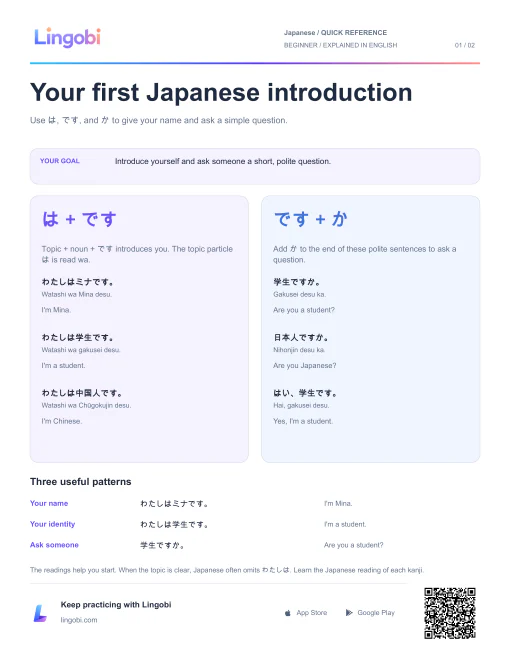
Learn Japanese · Explained in English
Practice guideIntroduce yourself and ask someone a short, polite question.
PDF · 2 pages · Beginner
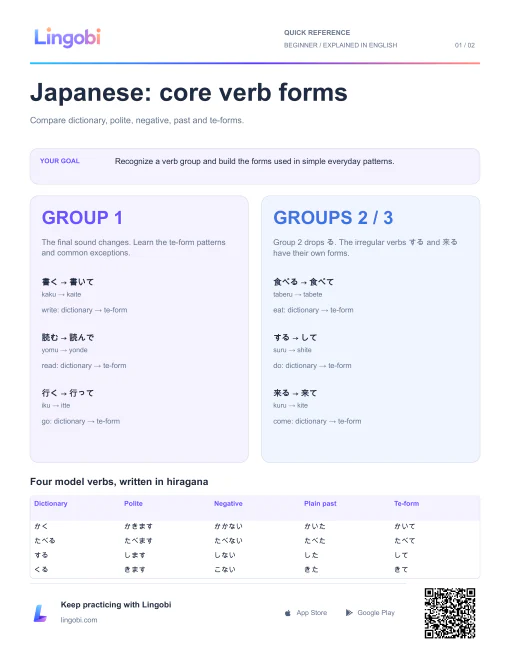
Learn Japanese · Explained in English
Practice guideCompare dictionary, polite, negative, past and te-forms.
PDF · 2 pages · Beginner
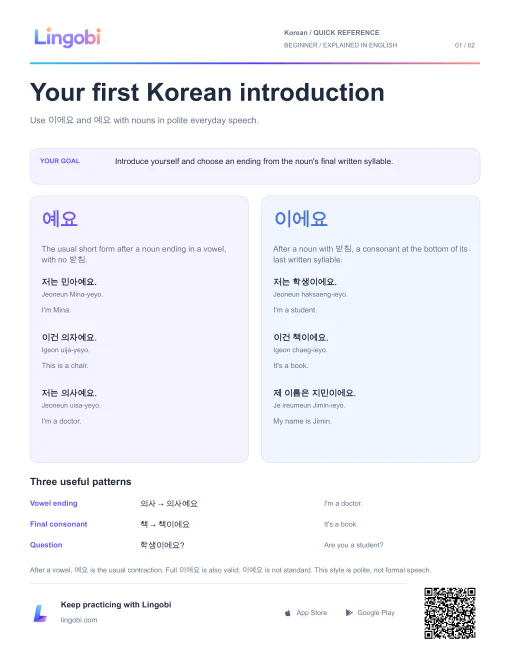
Learn Korean · Explained in English
Practice guideIntroduce yourself and choose an ending from the noun's final written syllable.
PDF · 2 pages · Beginner
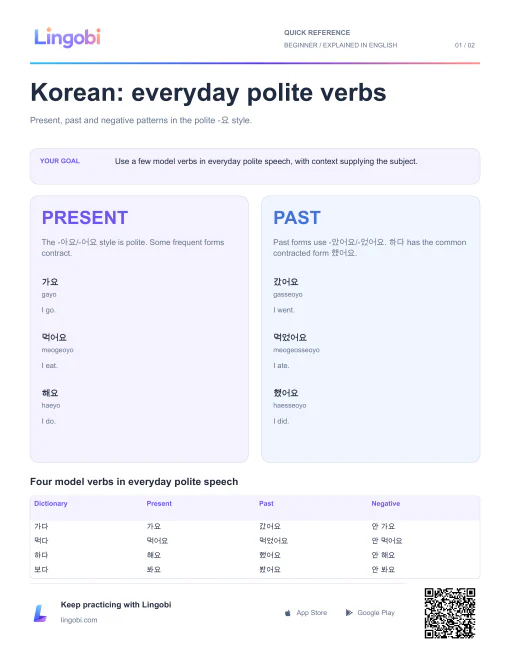
Learn Korean · Explained in English
Practice guidePresent, past and negative patterns in the polite -요 style.
PDF · 2 pages · Beginner
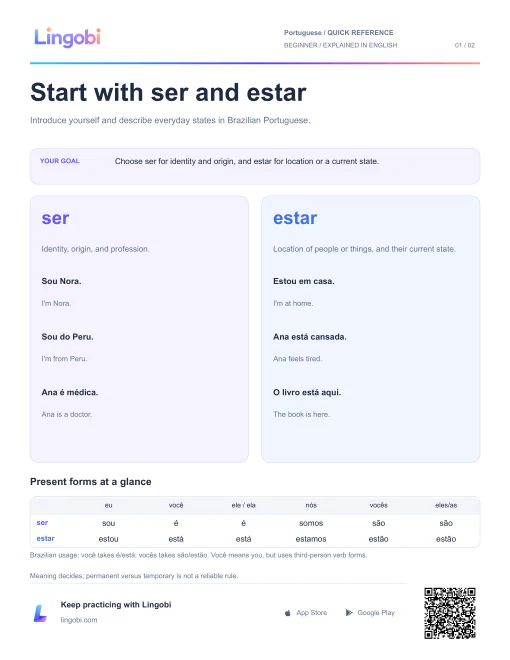
Learn Portuguese · Explained in English
Practice guideChoose ser for identity and origin, and estar for location or a current state.
PDF · 2 pages · Beginner
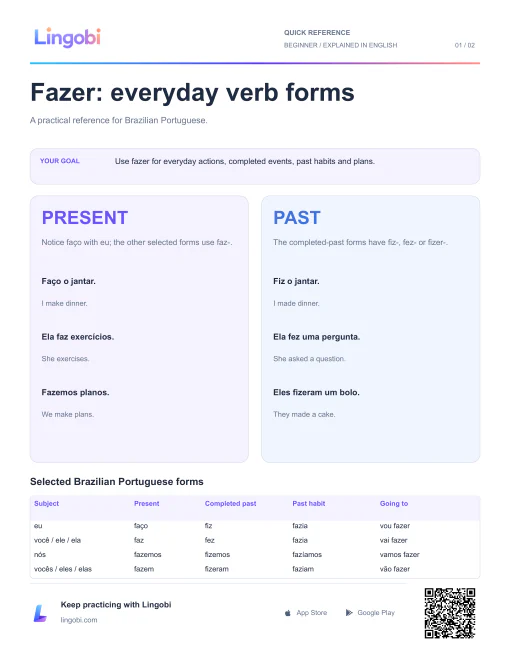
Learn Portuguese · Explained in English
Practice guideA practical reference for Brazilian Portuguese.
PDF · 2 pages · Beginner
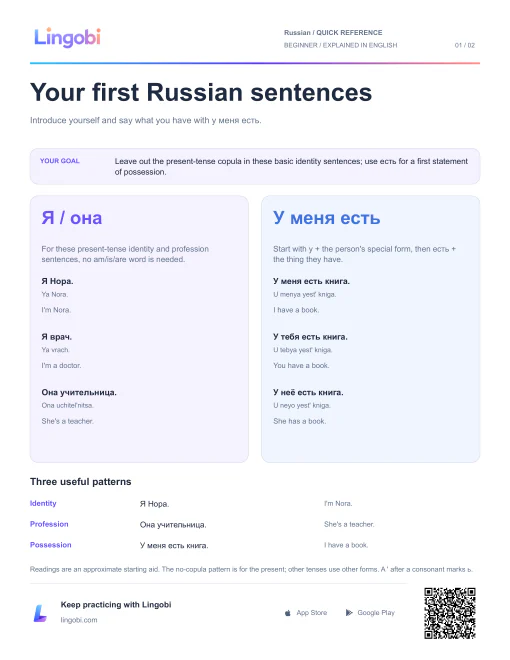
Learn Russian · Explained in English
Practice guideLeave out the present-tense copula in these basic identity sentences; use есть for a first statement of possession.
PDF · 2 pages · Beginner
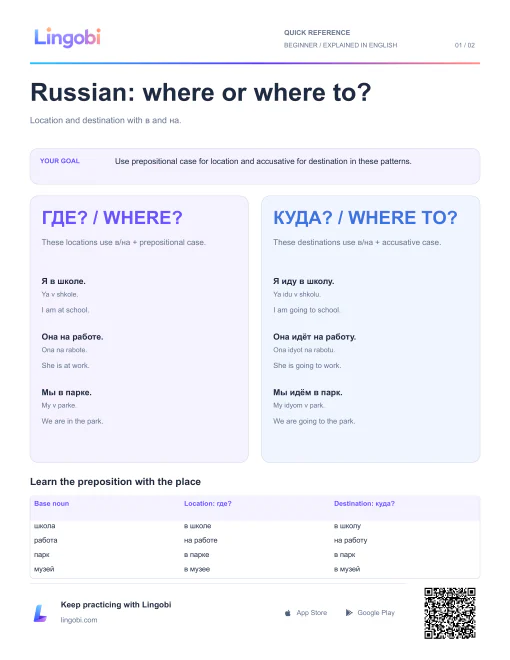
Learn Russian · Explained in English
Practice guideLocation and destination with в and на.
PDF · 2 pages · Beginner
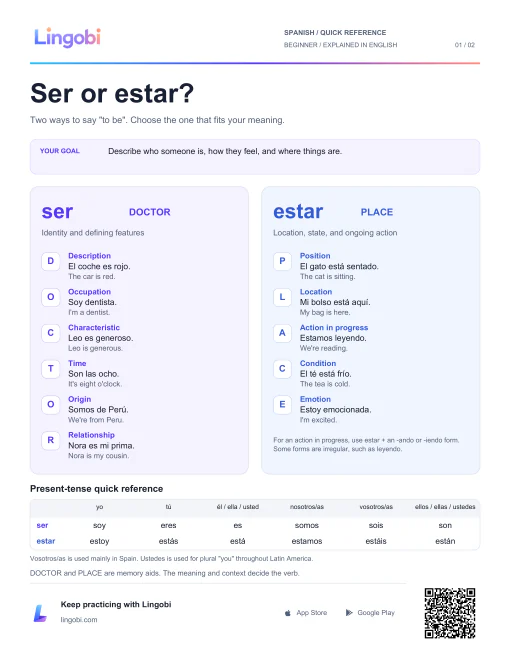
Learn Spanish · Explained in English
Practice guideLearn when to use each verb, then practice with eight questions and explained answers.
PDF · 2 pages · Beginner
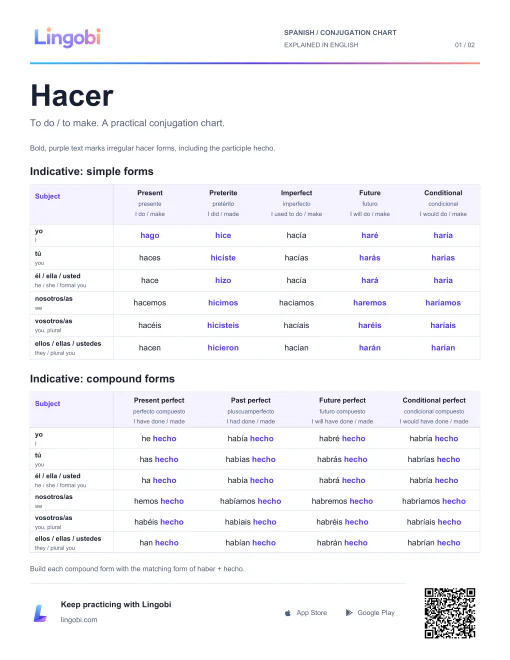
Learn Spanish · Explained in English
Reference chartTo do / to make. A practical conjugation chart.
PDF · 2 pages · Intermediate
Start with the explanation and examples. Compare the expressions and notice how their meaning changes with the context. Save or print the guide for a quick reference.
Use a chart to build your own examples. When a guide includes exercises, try them before checking the answers and explanations.
Write your own examples and say them aloud. Return to the guide later, or continue with a short lesson to keep the concept fresh.